Jobs for Nature - Mahi mō te Taiao is a $1.245 billion programme that manages funding across multiple government agencies to benefit the environment, people and the regions. It is part of the COVID-19 recovery package. The programme is intended to run for four years.
The programme aims to:
So far we have successfully bid for funding to support almost $10 million in environmental projects for Tasman District. The projects include both Government and Council funding and many will be delivered in partnership with other agencies and community groups.
The following initiatives will create jobs and stimulate our regional economy, while also delivering on our community's aspirations for significant environmental improvements.
Tasman District Council has a Jobs for Nature Programme Supply Panel. Read more about who makes up the panel and the projects they'll be involved with.
The Wilding Conifer Control project under the Jobs For Nature programme successfully concluded on time and within budget, marking it as the first project to close under the programme. With its original funding ending in June 2024, ongoing funding is now managed under a new project outside the J4N programme.
| Total value | Jobs for Nature Government funding | Tasman District Council funding | Target number of jobs created over the duration of project (FTE - full-time equivalent) | Timeframe |
| $3 million |
$3 million Ministry for Primary Industries |
$81,000 | 8 |
4 years September 2020 - September 2024 |
Partners: Department of Conservation, Landowners, Iwi, Kotahitanga mo te Taiao Alliance
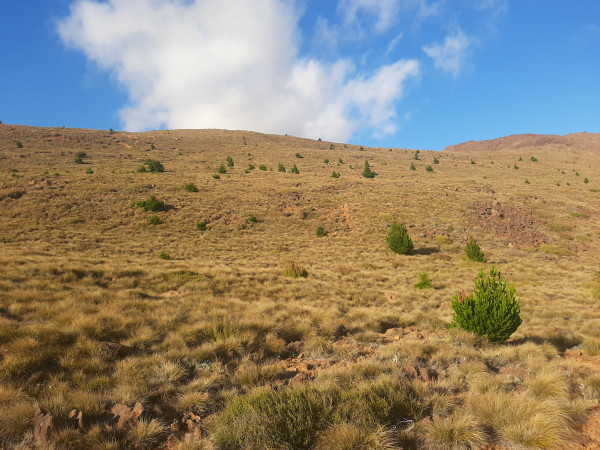
Wilding conifers in the Red Hills of Mt Richmond Forest Park. Photo credit: PF Olsen
Keep up with the project as it progresses here.
An existing plan to eradicate wilding conifers in 28,000ha of Mount Richmond forest and adjoining private land has been rescoped in light of Covid-19 impacts in order to create a greater number of jobs, by using ground teams in preference to aerial spraying in parts of the park that are more accessible by foot. The project will provide training and employment for workers over four years, as well as the potential for ongoing work in the native vegetation restoration field in other areas of Tasman District.
Mount Richmond Forest Park has unique ecosystems developed on mineral-rich geology, plants found nowhere else which are taonga (treasures) and are at risk of being lost as the area becomes a pine forest.
With a mix of Crown, iwi and private land in the area, the opportunity to work collaboratively makes this a great unifying project across the park and connected land. The area is of national park quality and, by working together, we can make great strides into restoring its outstanding natural features.
The project forms part of the Kotahitanga mo te Taiao Alliance Strategy.
Apart from the initial funding agreement, further funding has been recieved to increase the scope of the project. This includes:
You can learn more about wildings and they risk they pose to our environment here.
| Total Value | Jobs for Nature Government funding | Tasman District Council funding | Target number of jobs created over duration of project (FTE) | Timeframe |
| $1.39 million |
$1.065 million Ministry for the Environment |
$325,680 | 9 | 5 years |

Sunset over the Waimea Inlet
Partners: Waimea Inlet Coordination Group, Waimea Water Ltd, Tasman Environment Trust, Department of Conservation
This project concluded on 30 June 2025.
Read more about what was achieved.
The Waimea Inlet is the largest enclosed estuary in the South Island, with internationally significant migratory bird species and nationally significant rushland values and other endangered or threatened species. These include birds such as bartailed godwit, white heron, royal spoonbill, little egret, Australasian bittern, and banded rail, and plants such as coastal peppercress and grey salt bush. However much of the margin, island and freshwater habitat has been significantly modified.
The new funding will allow us to extend the scale of planting from an existing Billion Trees project to re-establish vegetation on the estuary and freshwater margins, undertake effective weed management, and install 1 kilometre of fencing to protect the new plantings from damage by stock or vehicles.
We will plant and maintain 110,00 plants in to enhance and restore key estuarine ecosytems at:
| Total value | Jobs for Nature Government funding | Tasman District Council funding | Other external funding | Target number of jobs created over duration of project (FTE) | Timeframe |
| $1.023 million |
$500,000 Ministry for the Environment |
$510,480 | $13,000 - Nelson City Council | 5 | 5 years |
Partners: Waimea Inlet Coordination Group, Nelson City Council, Department of Conservation, Tasman Environment Trust
This project concluded on 30 June 2025. Read more about what was achieved.
Key habitats and ecosystems within the Waimea Inlet will be restored and protected by:
| Total value | Jobs for Nature Government funding | Tasman District Council funding | Target number of jobs created over the duration of project (FTE - full-time equivalent) | Timeframe |
| $1.039M |
$999,640 Tasman Pine Forests Ltd funds $40,000. |
NA | 10.4 |
4 years |
Partners: Tasman Pine Forests Ltd, Te Uru Rākau – New Zealand Forest Service
 Project updates
This project concluded in November 2025. Find out what the project achieved here.
Tasman District Council received just under $1 million from Te Uru Rākau – New Zealand Forest Service for its Teapot Valley/Pigeon Valley fire restoration project, with landowners Tasman Pine Forests Ltd contributing another $70,000 in cash and resources to the project.
This project will run over a four-year period as part of Government stimulus funding through the One Billion Trees and Jobs for Nature programmes.
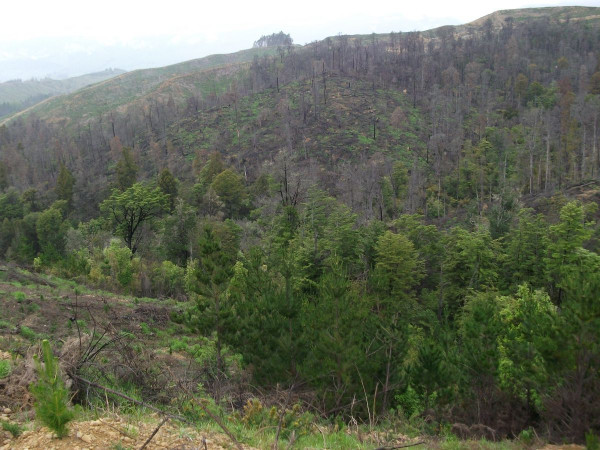
The Pigeon Valley fire started on 5 February 2019 and burnt through an area of approximately 2,400 hectares (ha) in the Tasman district.
Of the total area burnt, 1400 ha was plantation pine forest managed by Tasman Pine Forests Ltd.
Patches of native bush and wetland areas within the pine plantation were also affected.
Three sites within the Teapot Valley catchment, identified as Significant Natural Areas (SNAs), will be restored in this project through a mixture of weed control, replanting in around 10 ha of the area, as well as direct seeding.
| Total value | Jobs for Nature Government funding | Tasman District Council funding | Other external funding | Target number of jobs created over duration of project (FTE) | Timeframe |
| Just over $4 million |
$3.1 Ministry for the Environment |
$241,000 | $24,800 | 20 | 5 years |
Partners: Department of Conservation, NIWA, Te Ātiawa ki te Waipounamu Trust, Manawhenua ki Mohua, Ngāti Rārua, Ngāti Toa Rangatira, Ngāti Tama, Ngāti Koata, Kotahitanga mō te Taiao, Tasman Environment Trust, NZ Landcare Trust, Tasman Bay Guardians and Whitebait Connection, Motueka Technology Education Centre (MoTEC), BirdsNZ, Beef and Lamb NZ and Fonterra.
Keep up with the project as it progresses here.
This project will support Tasman’s most vulnerable and ecologically important water bodies. Such waterbodies tend to be smaller and scattered across the region.
Around 40 natural wetlands across the district will be improved and protected by:
This project also aims to create seven new constructed wetlands across the Tasman district, bringing improvements to biodiversity and stream health.
On top of the funding outlined above, there will be in-kind contribution of $846,000 comprising Council staff time, landowner time and machinery, and a community planting at Motueka Delta.
| Total value | Jobs for Nature Government funding | Tasman District Council funding | Other external funding | Target number of jobs created over duration of project (FTE) | Timeframe |
| Just over $2 million |
$1.75 Ministry for the Environment |
$264,500 | - | 17 | 5 years |
Partners: Landowners, Ngā Iwi o Te Tau Ihu o Te Waka a Māui
Stakeholders: Department of Conservation, Kotahitanga mō te Taiao, NZ Fish Passage Advisory Group, Tasman Bay Guardians, Whitebait Connection, Beef and Lamb NZ, Fonterra, Olleycology, ATS Environmental and Kūmānu Environmental
Keep up with the project as it progresses here.
This fish migration project will improve fish diversity and abundance across Tasman by assessing over 4,000 in-stream structures and restoring fish passage to approximately 1,500 of these.
New regulations brought in under the National Environmental Standards for Freshwater 2020 required Council to assess in-stream structures for fish passage.
These include culverts, weirs, dams, and water intakes that migratory fish cannot climb or swim over.
Council is also required to put in place an action plan to ensure fish passage at all such structures unless there is a resource consent that explicitly allows for the structure.
Council has almost completed assessing and remediating its own in-stream structures and many private landowners and forestry companies are well on the way to doing the same.
This project will allow action to be taken to address these barriers to fish migration as they are identified.
Council's Principal Scientist of Freshwater & Estuarine Ecology, Trevor James has put together a series videos as an overview to the projects. You can watch them here.
The project team has put together this information document, also of interest to affected landowners. Download it here to learn more about the Fish Passage project. (pdf 668 KB) (pdf, 668 KB)